Applying Public Health to Prosthetics and Orthotics Practice
Every prosthetist and orthotist plays a role in improving public health. Routine consultations offer opportunities to promote healthy lifestyles, encourage self-management, prevent complications and address wider factors affecting health. By looking beyond the presenting condition, we can help improve long-term outcomes and reduce health inequalities. Our role extends beyond providing prosthetic and orthotic devices; we help prevent falls, reduce pain, minimise diabetic foot complications, encourage physical activity, enable people to return to work and support healthy ageing. By addressing health inequalities, promoting prevention and measuring outcomes that matter to people, we play a vital role in improving population health and reducing future demand on health and care services.
“Public health isn’t something we do on top of our job; it’s already part of what we do every day.”
The AHP Public Health Strategic Framework 2025–2030
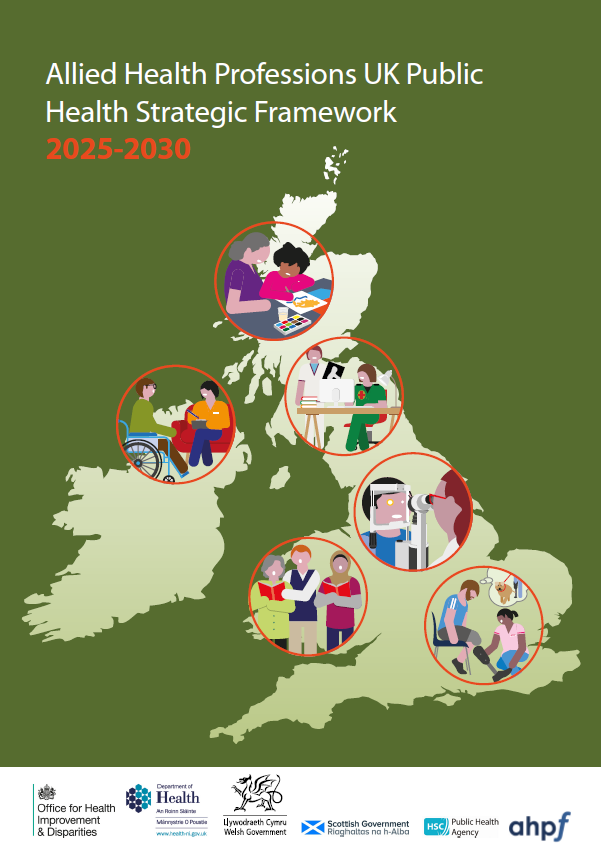
The UK Allied Health Professions (AHP) Public Health Strategic Framework 2025–2030 sets out a shared vision for embedding public health into every AHP role across the UK. It recognises that AHPs play a vital role in preventing illness, improving wellbeing and reducing health inequalities, not just treating disease. For prosthetists and orthotists, the framework reinforces that our work extends beyond providing devices to supporting independence, participation, work and healthier communities. The framework encourages all AHPs to develop the knowledge and confidence needed to integrate public health into everyday practice by measuring and demonstrating the wider impact of our interventions on population health.
Want to learn more?
UK AHP Public Health Strategic Framework 2025–2030:
AHP UK Public Health Strategic Framework 2025-2030_final+links
AHP Guide for Leaders: Work as a Health Outcome
Work is increasingly recognised as an important determinant of health, with good work contributing to better physical health, mental wellbeing, financial security and social inclusion. The AHP guide on Work as a Health Outcome encourages Allied Health Professionals to consider employment as part of routine care, recognising that supporting people to remain in, return to or access work can improve long-term health outcomes. Prosthetists and orthotists play a vital role by reducing pain, improving mobility and function, restoring confidence, and enabling people to remain productive and independent. By routinely asking patients about their work and considering work-related goals during rehabilitation, we can demonstrate the wider value of our interventions beyond traditional clinical outcomes.
To read more about this, go to
AHP Work as a Health Outcome Resources: https://www.ahpf.org.uk/Public_Health.htm
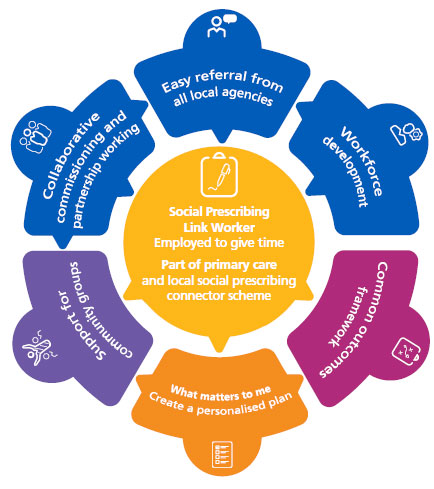
Social Prescribing: Connecting People with Community Support
Not all factors affecting health can be addressed through clinical treatment alone. Social prescribing enables healthcare professionals to connect people with community services that support their physical, emotional and social wellbeing. Prosthetists and orthotists can help patients access local walking groups, exercise programmes, peer support networks, falls prevention classes, employment services and voluntary organisations that complement rehabilitation. By recognising wider social needs and signposting patients to appropriate support, we help improve independence, reduce isolation and promote healthier communities.
“Sometimes the best thing we can offer isn’t another appointment; it’s helping someone find the right support beyond our clinic walls.”
Want to learn more?
Access resources from NHS England or the RSPH.
Making Every Contact Count (MECC)
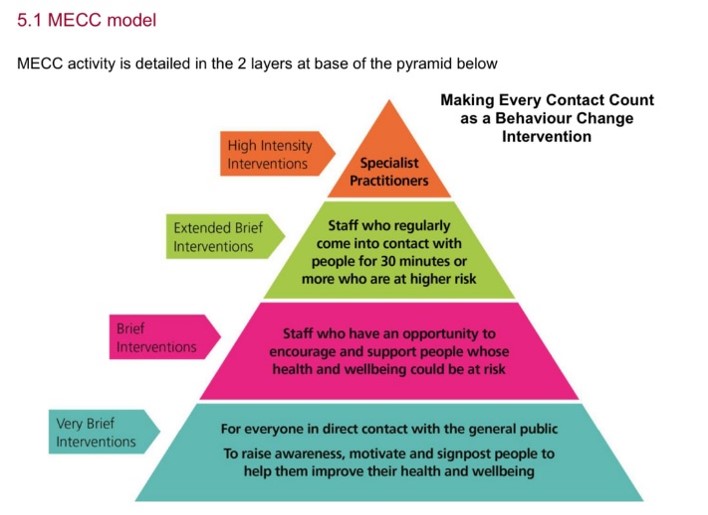
Making Every Contact Count (MECC) is a national public health approach that encourages healthcare professionals to use everyday conversations to support healthier behaviours. Prosthetists and orthotists have regular contact with patients throughout their rehabilitation journey, placing us in an ideal position to encourage physical activity, healthy weight management, smoking cessation, foot care, falls prevention and self-management. These brief, person-centred conversations can help prevent future ill health, improve long-term outcomes and empower patients to take greater control of their wellbeing. Every appointment is an opportunity to make a positive difference beyond the device.
Want to learn more?
Supporting the Shift from Sickness to Prevention
Healthcare is increasingly shifting from treating illness to preventing it before it occurs, and prosthetists and orthotists are already contributing to this agenda every day. Our interventions help prevent falls, reduce diabetic foot complications, minimise joint deterioration, improve physical activity and maintain independence, reducing the need for more intensive healthcare in the future. By combining clinical expertise with health promotion, early intervention, MECC and social prescribing, we support healthier lifestyles and reduce health inequalities. This preventative approach aligns with the NHS vision of delivering care that keeps people well, rather than simply treating illness when it arises.
Want to learn more?
NHS Prevention Programme: https://www.england.nhs.uk/prevention/
If you are interested in public health, explore the flexible courses and learning pathways offered by the Royal Society for Public Health. You can also consider the PgCert 12-month NHS England Population Health Fellowship to develop practical skills through academic learning and a workplace project.
Other useful short courses include:
- NHS e-Learning for Healthcare: Population Health Management – introduces population health management, data and analytical approaches.
- OpenLearn: Introducing Public Health – a free introductory course covering public health and health promotion.
- RSPH Level 2 Award in Public Health – an accredited introduction to health improvement, disease prevention and public health risks.
- London School of Hygiene & Tropical Medicine short courses – specialist online, hybrid and in-person courses across public and global health.
- University of Aberdeen online public health short courses – flexible postgraduate-level courses that may be studied individually or contribute towards a wider qualification.
- NHS e-Learning for Healthcare – free learning for health and care professionals across public health, prevention, health inequalities and related subjects.
Chiazoka Ezeuzo is BAPO’s Public Health and Sustainability Lead. For any enquiries relating to public health or sustainability, please email enquiries@bapo.com.