
Towards a Greener Future: Sustainability in Prosthetics and Orthotics
Climate change is not only an environmental issue; it is one of the most significant public health challenges of our time. Rising temperatures, extreme weather, air pollution and disruption to essential services can all affect health, with the greatest impacts often experienced by people who are already vulnerable or living with health inequalities.
As prosthetists, orthotists, technicians, manufacturers and service providers, we can help reduce the environmental impact of healthcare while continuing to deliver safe, effective and person-centred care. Which is why we have developed Top ten sustainability Priorities for P&O to help us embed sustainability into everyday practice.
P&O services rely on manufactured devices, specialist materials, fabrication processes, packaging, deliveries and patient travel. Although these activities create environmental challenges, they also provide opportunities for innovation and improvement.
What Does Net Zero Mean?
Net zero means reducing greenhouse gas emissions as far as possible and balancing any unavoidable remaining emissions through credible carbon-removal measures.
NHS England aims to achieve:
- Net zero by 2040 for emissions under its direct control.
- Net zero by 2045 for wider emissions it can influence, including supply chains, medical devices and travel.
Healthcare contributes approximately 4–5% of England’s carbon emissions and around 40% of public-sector emissions. Scotland, Wales and Northern Ireland are also progressing their respective healthcare sustainability commitments.

What Can P&O Services Do?
Deliver sustainable clinical care
Sustainability begins with providing the right intervention, for the right person, at the right time. Thorough assessment, clear treatment goals, appropriate product selection and effective follow-up can prevent avoidable appointments, remanufacturing and early device replacement.
P&O Sustainability in Action
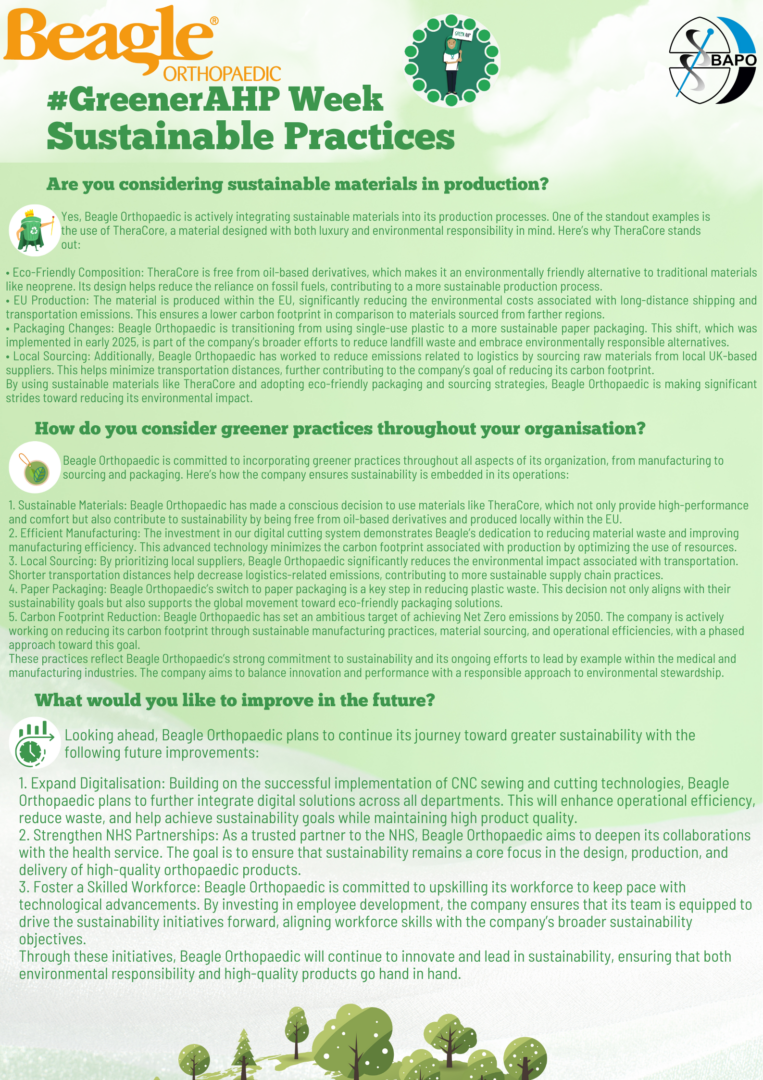
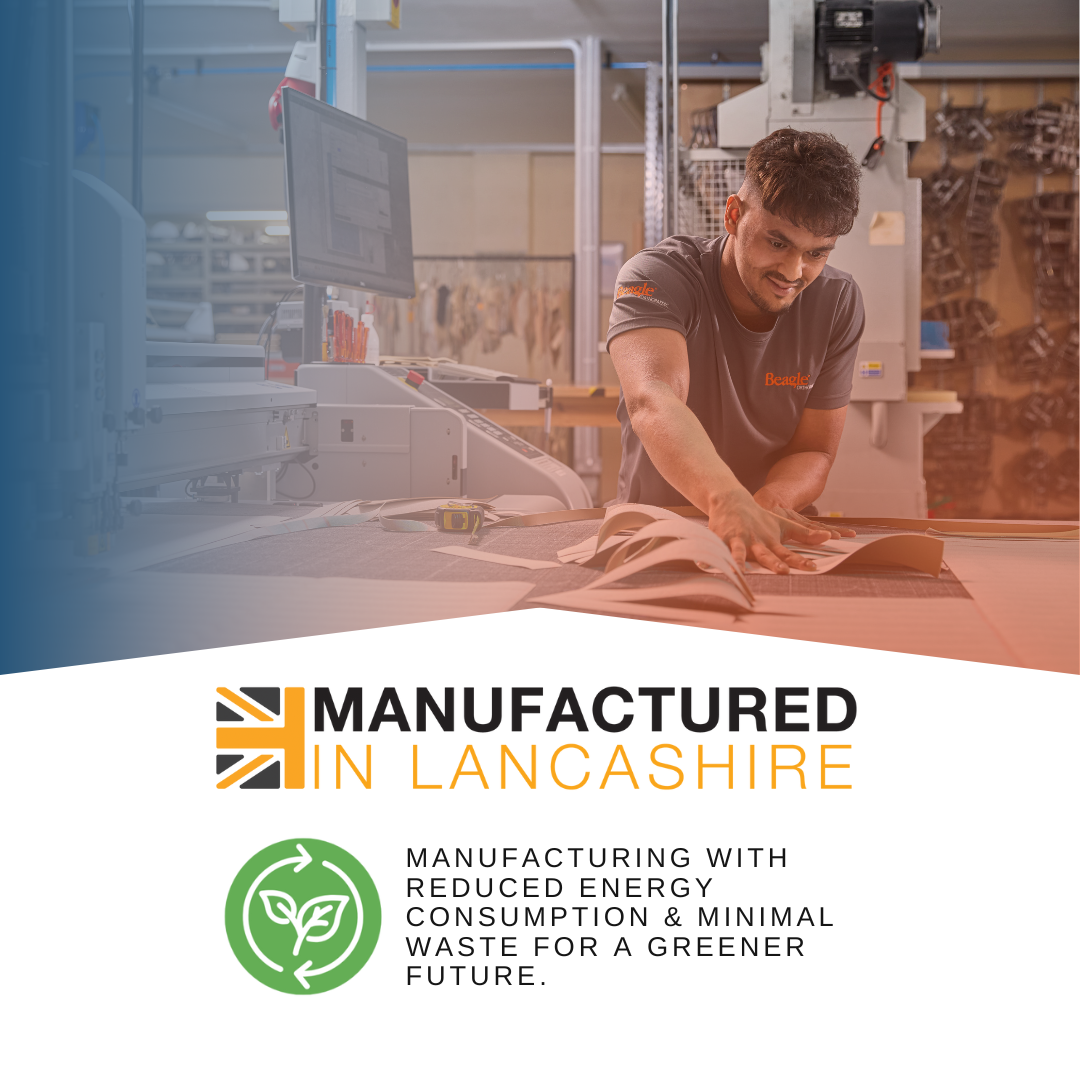
- Reduce materials and waste: Minimise single-use plastics, improve fabrication efficiency, separate recyclable materials and explore safe reusable alternatives.
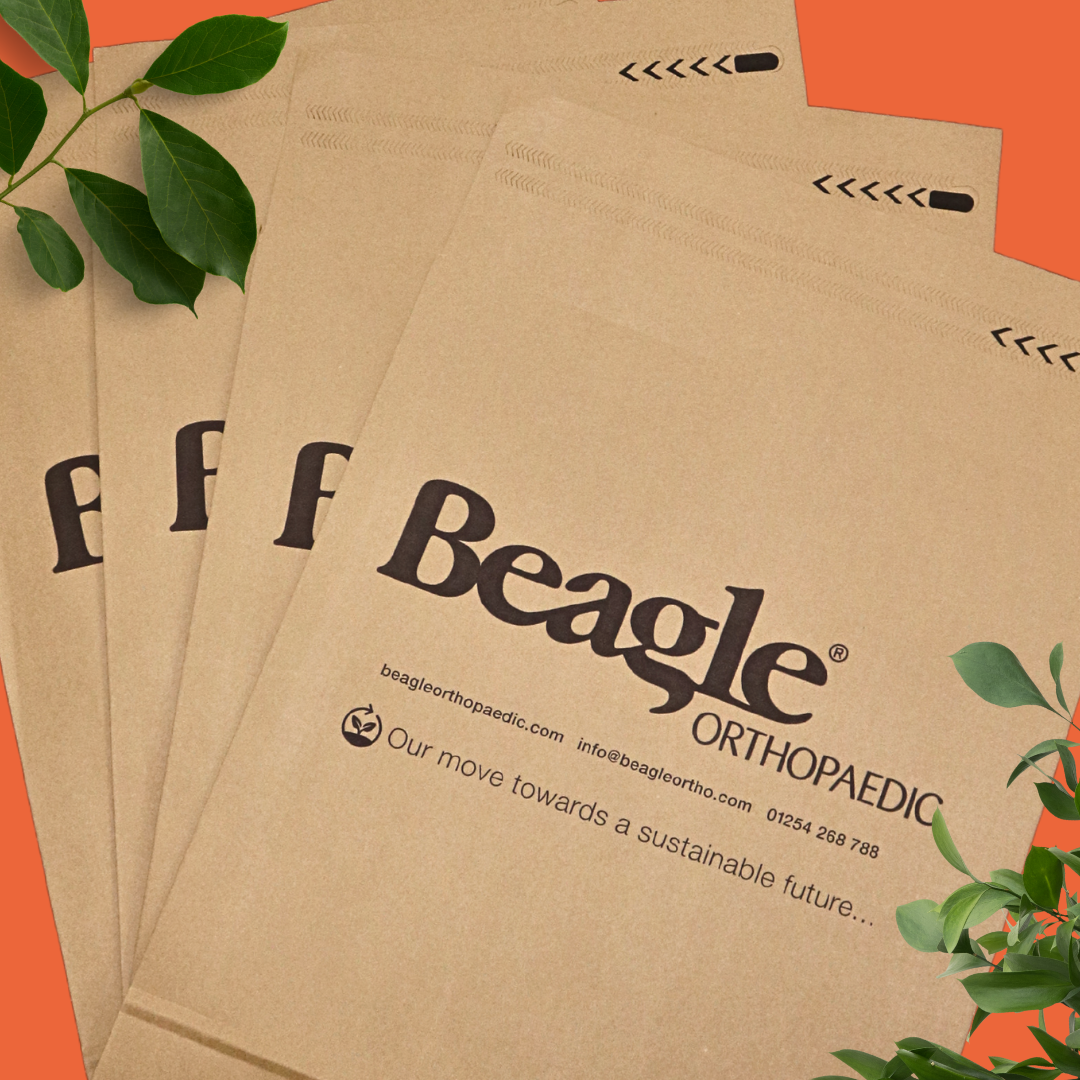
- Work with suppliers: Encourage reduced packaging, consolidated deliveries, low-emission transport and product repair, take-back or recycling schemes.
- Reduce unnecessary travel: Use virtual consultations, combined appointments and postal delivery where clinically appropriate, while maintaining patient choice and accessibility.
- Improve workplace practices: Use digital records, reduce printing, switch off unused equipment and promote energy-efficient lighting and sustainable travel.
- Repair, refurbish and donate responsibly: Extend device life where safe and ensure all reuse or donation follows medical-device regulations, infection-prevention requirements and approved local pathways.
To learn more about sustainable practices in P&O, please check the links below
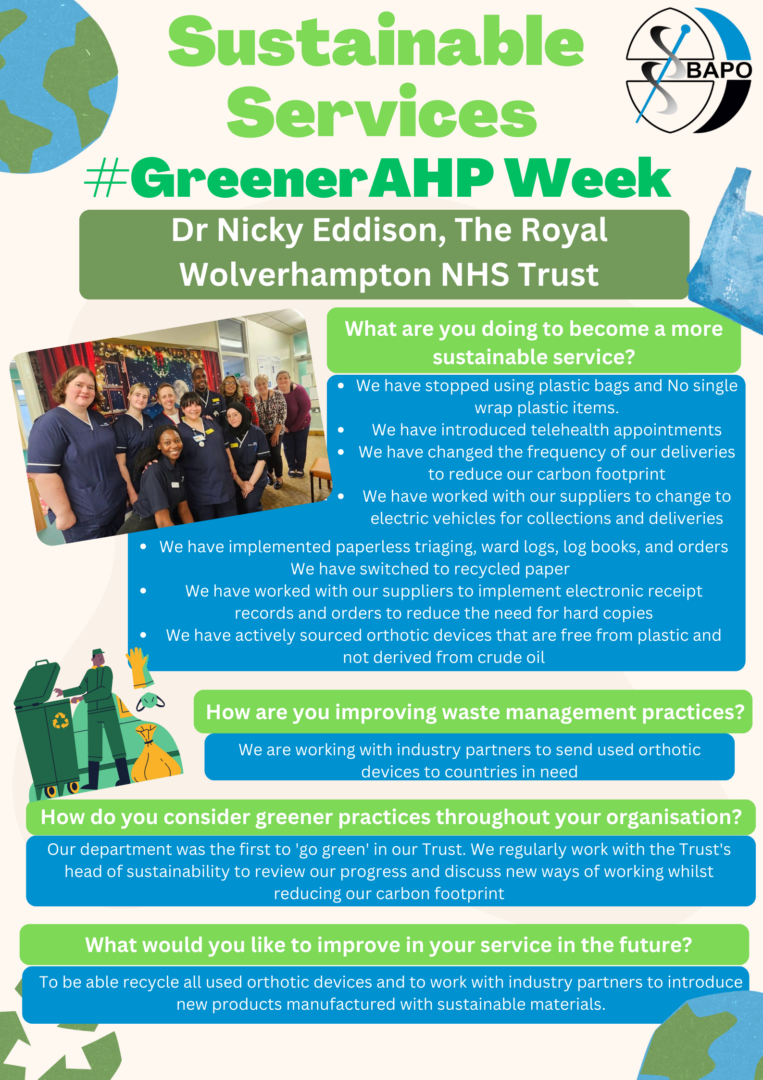
Read the Royal Wolverhampton Greener AHP case study
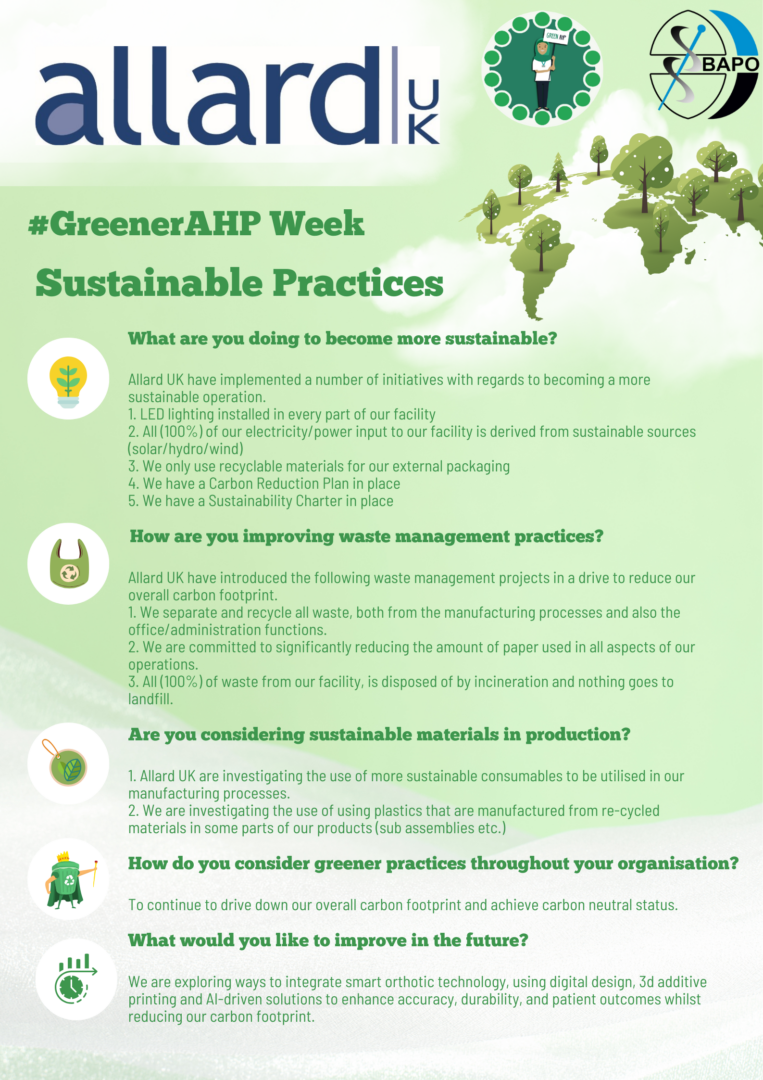
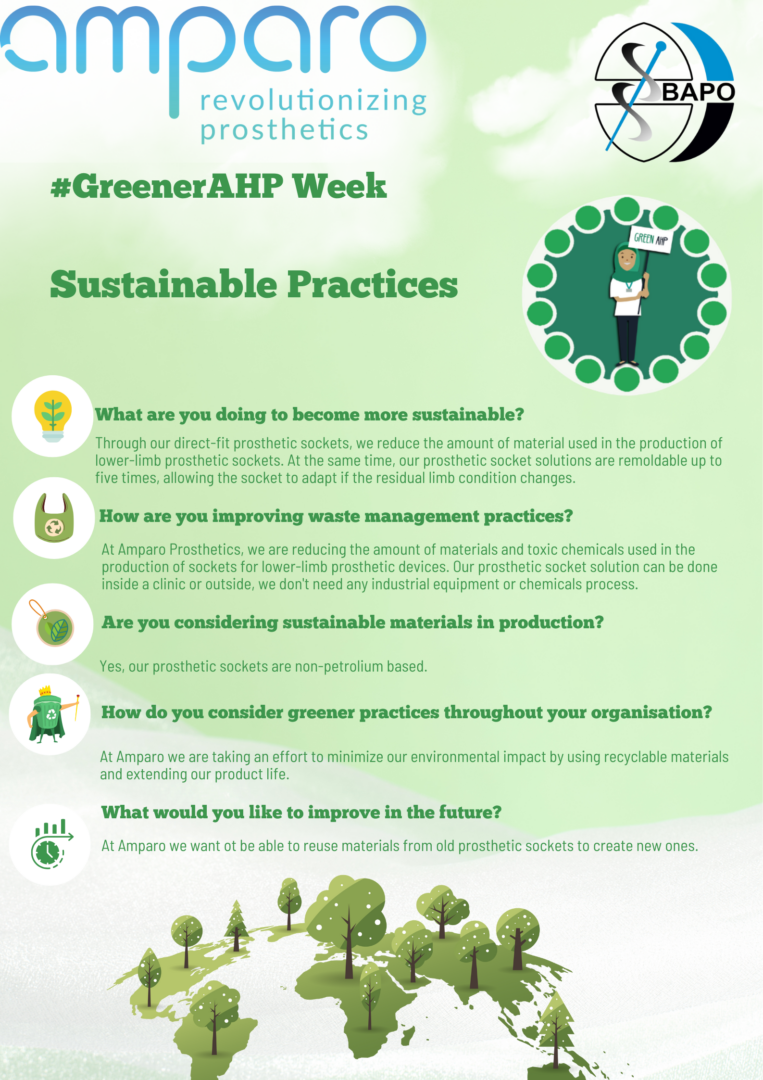
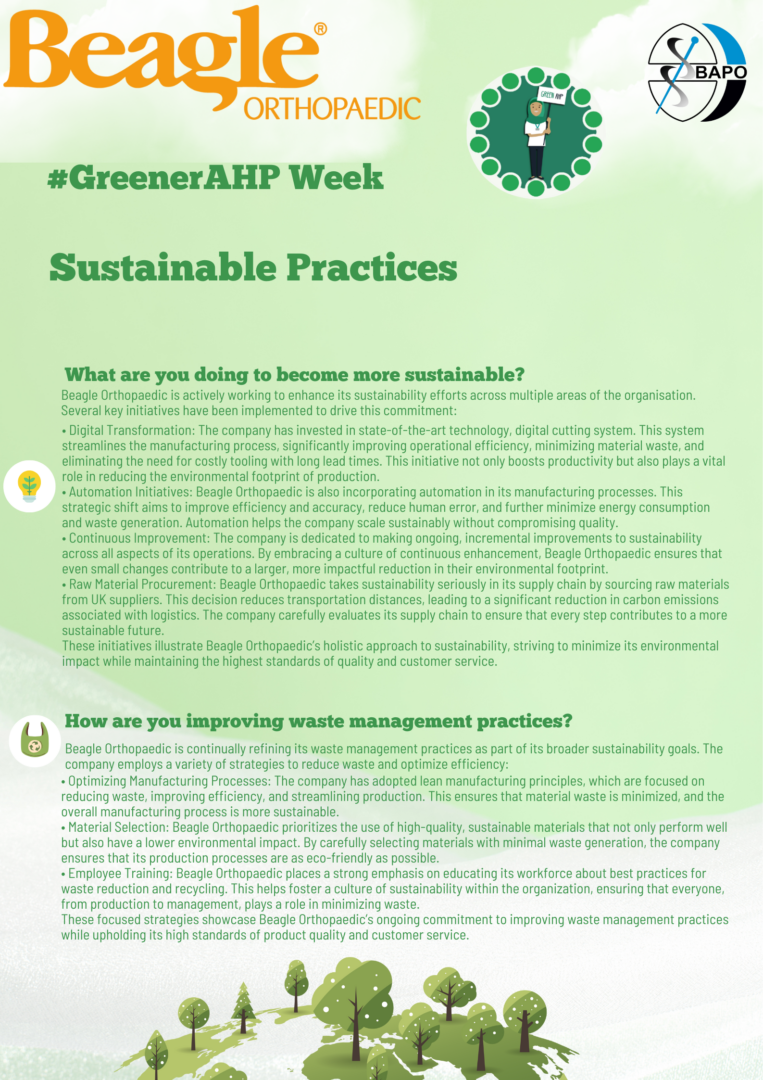
Read about Blatchford’s sustainability approach
Read the Oxford orthotics sustainability story
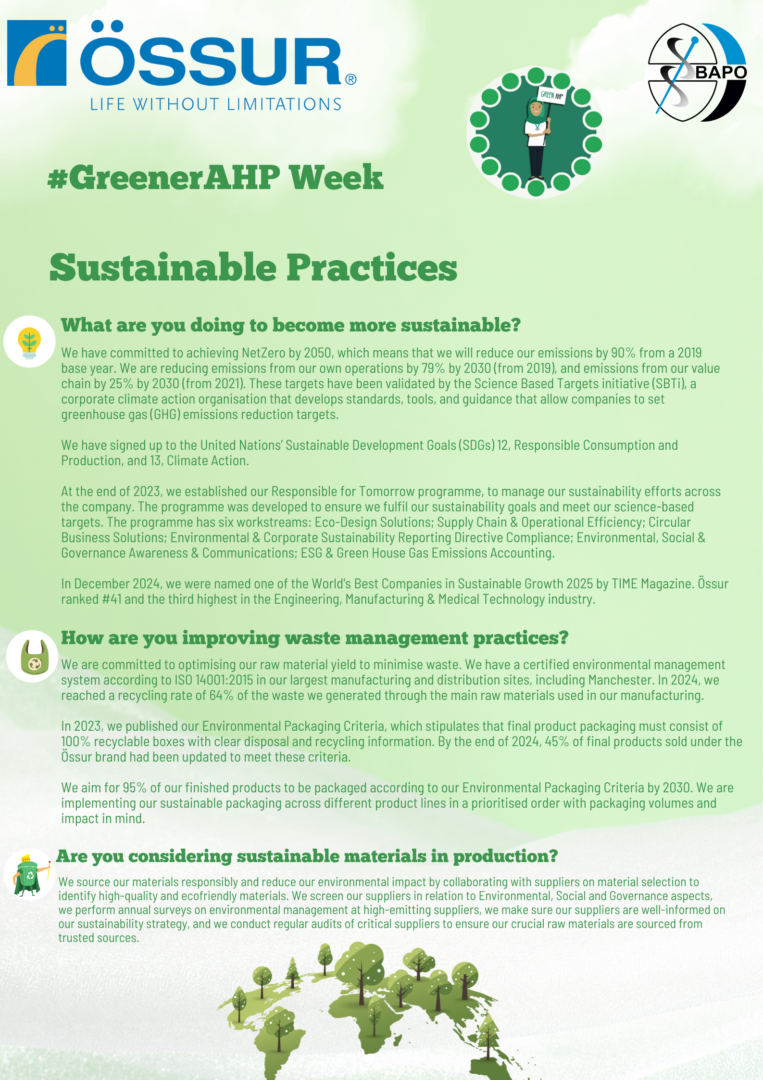
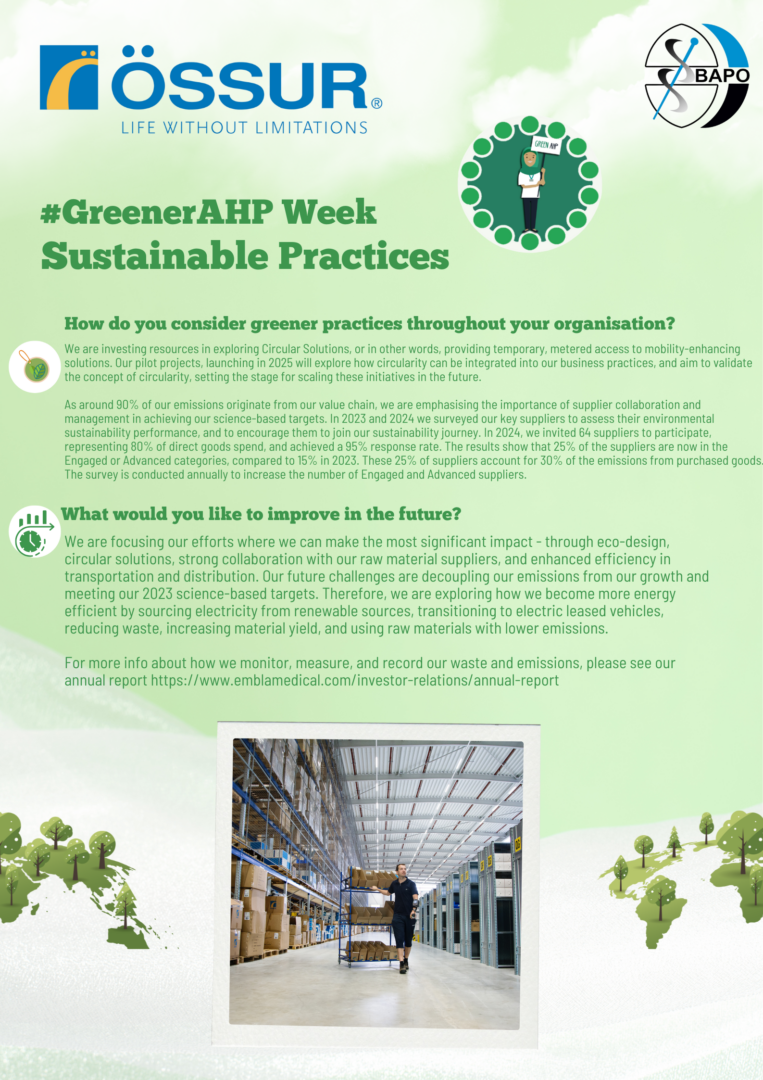
Our Sustainability Commitment | Business | Environment | People | Ossur
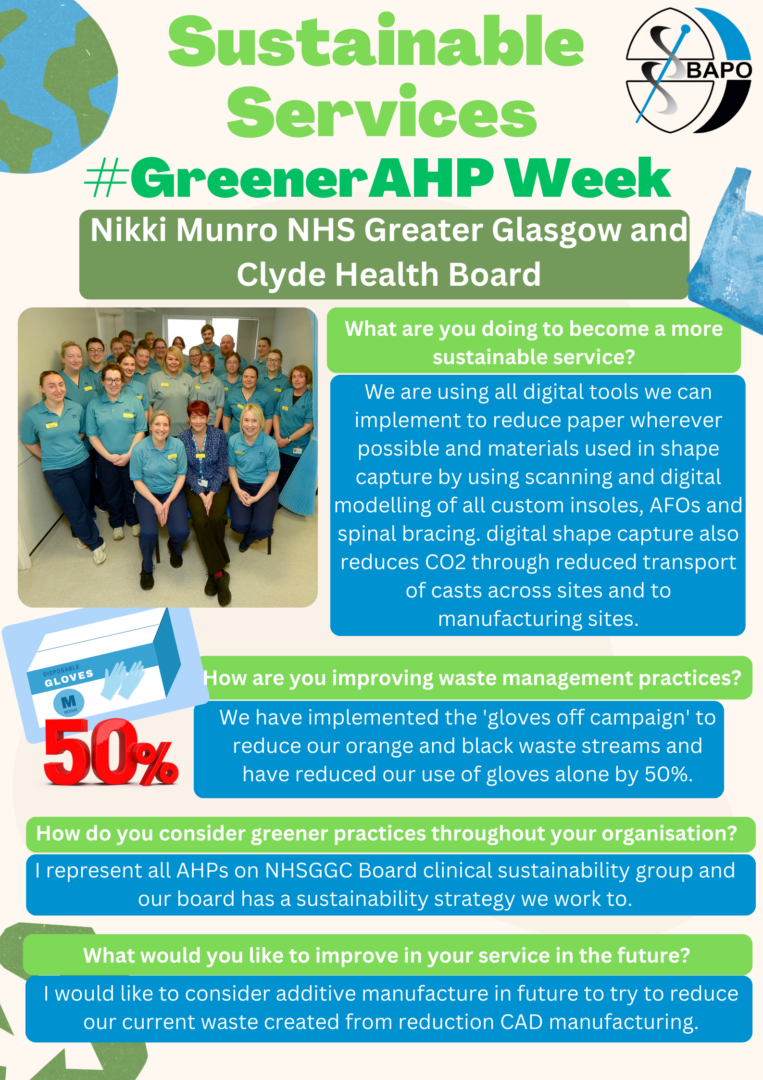
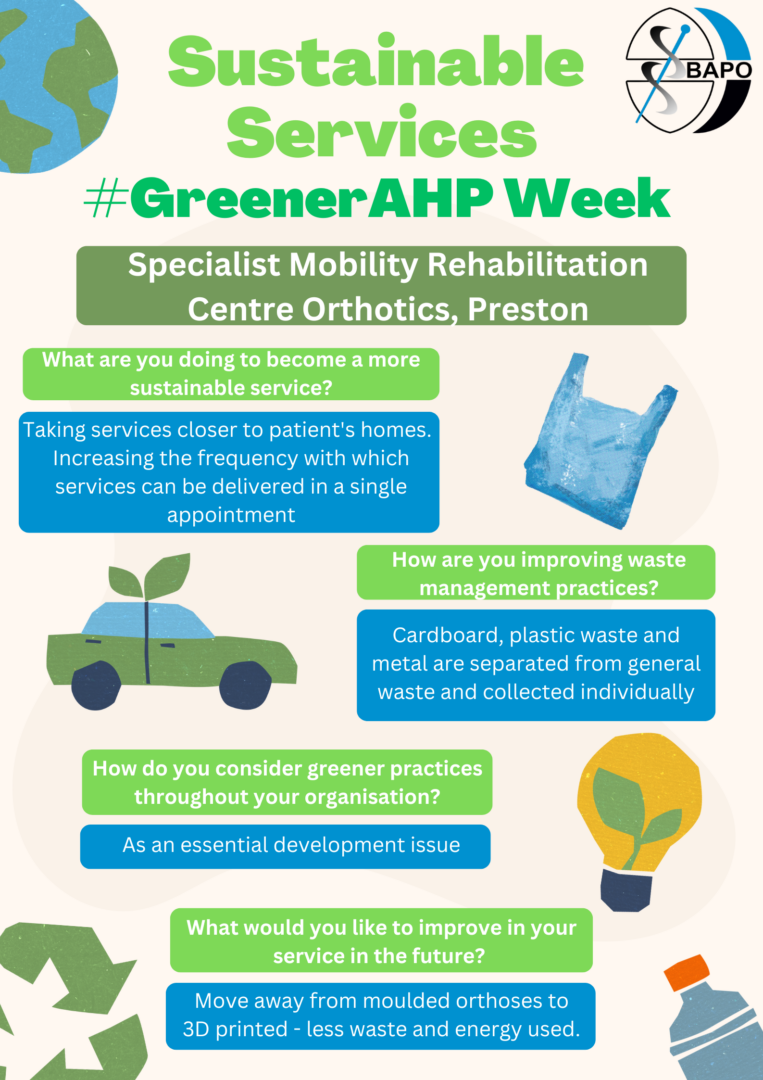
Case Studies and Inspiration
Companies
Get Involved and Stay Informed
- Greener AHP Hub: A dedicated NHS England platform with guidance tailored for AHPs.
https://www.england.nhs.uk/ahp/greener-ahp-hub/ - Sustainable Healthcare eLearning: Health Education England offers a free course on delivering care that is socially, economically, and environmentally sustainable.
https://www.e-lfh.org.uk/programmes/environmentally-sustainable-healthcare/
A sustainability project does not need to address everything at once:
- Identify one problem, such as excessive packaging or frequent deliveries.
- Collect simple baseline information.
- Involve clinical, technical and administrative staff.
- Work with patients, suppliers and sustainability teams.
- Test the change on a small scale.
- Measure the clinical, environmental, financial and social impact.
- Share the learning with others.
Share Your Sustainability Success
Has your service introduced a sustainable improvement involving waste, materials, packaging, procurement, travel, digital care or device reuse?
Share your project and learning with BAPO at Enquiries@BAPO.com.
Together, we can create a more sustainable P&O profession; one decision, one product and one thoughtful improvement at a time.